
cross-posted from: https://news.abolish.capital/post/55627
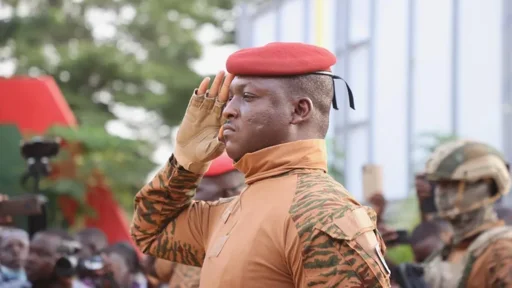
The revolutionary momentum in Burkina Faso continues to gather force. Since the rise of Captain Ibrahim Traoré and the launch of the Popular Progressive Revolution (PPR), the country has pursued an ambitious project aimed at reclaiming political sovereignty, restructuring economic relations, and deepening popular participation in national development. Alongside these political and economic initiatives, the revolutionary government has also placed emphasis on culture, historical memory, and the symbols that shape national consciousness.
In a recent directive issued on June 1, 2026, Prime Minister Rimtalba Jean Emmanuel Ouédraogo instructed all government institutions and ministries to adopt the term “comrade” in official administrative correspondence, public speeches, and formal addresses. The circular, titled “Harmonization of the Use of the Term ‘Comrade’ within the Context of the PPR,” argues that official language should reflect the values of equality, militant fraternity, and active solidarity between leaders and the people as Burkina Faso advances toward the construction of a new society.
The directive states that within the context of the Popular Progressive Revolution, language must embody the spirit of collective struggle and shared responsibility. It calls upon all state institutions to implement the use of the term “comrade” as part of a broader effort to harmonize practices already emerging within sections of the public administration.
The revolutionary history of “comrade”
The word “comrade” has a long and distinguished history within revolutionary and socialist movements. Emerging from struggles for social equality and collective emancipation, the term became widely used during the great revolutions of the twentieth century. In the Soviet Union, China, Cuba, Vietnam, or numerous anti-colonial liberation movements across Africa, Asia, and Latin America, “comrade” functioned as a rejection of social hierarchies and inherited privileges. It signified a relationship based not on rank, wealth, or inherited status, but on common commitment to a collective cause.
In Africa, revolutionary leaders frequently adopted the language of comradeship as part of wider efforts to dismantle colonial political cultures. Across liberation movements in Southern Africa and Western Africa, the term became synonymous with solidarity, sacrifice, and commitment to national liberation. It served as a reminder that political leaders were expected to remain connected to the masses rather than elevate themselves above them.
The Sankara legacy and revolutionary memory
In Burkina Faso, the use of camarade carries particularly profound historical significance. The directive invokes the legacy of the revolutionary government led by Thomas Sankara between 1983 and 1987. During Sankara’s presidency, the term was widely used within state institutions, public meetings, political education programs, and revolutionary organizations. Its purpose was to challenge colonial-era bureaucratic traditions that reinforced distance between government officials and ordinary citizens.
Sankara’s revolution sought not only to transform economic structures but also to cultivate a new political consciousness grounded in self-reliance, popular participation, integrity, and social justice.
elevation , June 9, 2026
From BT News via This RSS Feed.
OK I pull up
They finally caught up to the DSA
It’s almost like actually having the revolution is more important than quibbling over language
Yes, absolutely. My friend said this to me about the article and it made me very mad lol
Big ups taking their jab and exporting it here to mess with the bears
It was rather funny
Rubs the fur just the right way


