

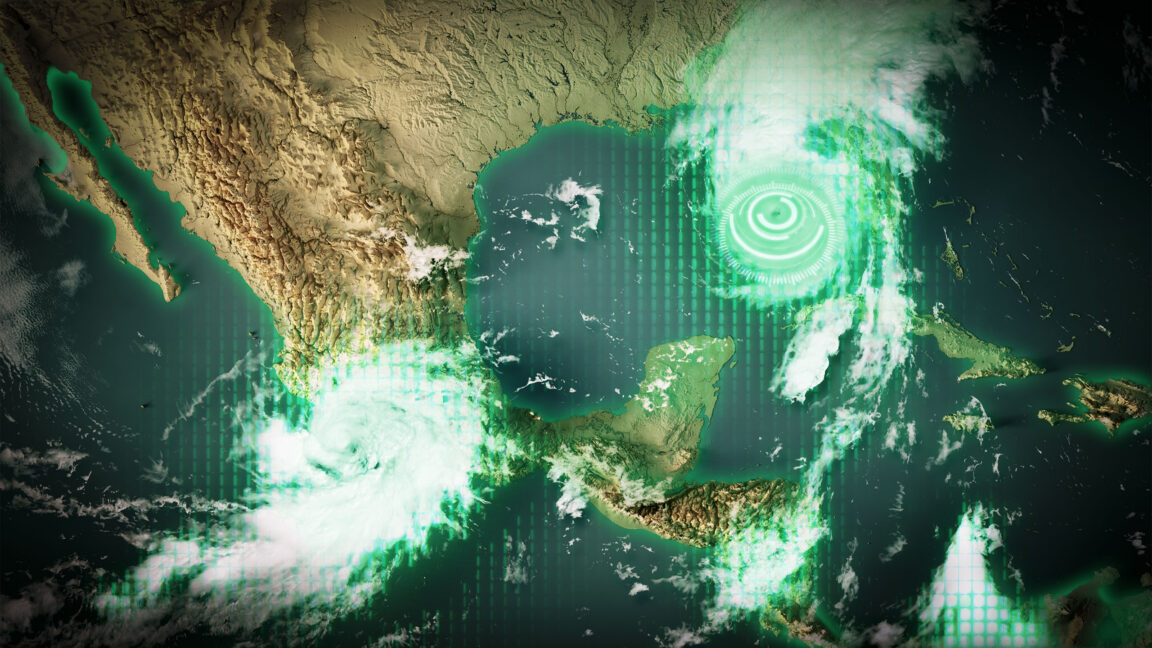
Forecasts of run-of-the-mill weather conditions have a lot of practical value, but there is life-or-death value in an accurate forecast of extreme weather conditions. The more extreme, the more true that is. But just as a bird-identifying algorithm can’t identify a bird it wasn’t shown during training, AI-based weather models can fail at predicting extreme weather that wasn’t in their training dataset.
Because extremes are rare, even a very large training dataset may lack certain kinds of events, or at least any examples as extreme as what might be about to happen in the real world. (If climate change is influencing a given weather pattern, the past is a poor guide to the future.) And if we include all the extreme events in the training phase, we’re left without any to use to test the system afterward.
Compared to ECMWF’s high-resolution physics-based model, a recent study found that the common machine learning models “tend to underestimate both the frequency and intensity of record-breaking events, […] with growing errors for larger record exceedance.” Since these models won’t go beyond what they saw in training, they may smooth out extreme events, capping them so they stay within the bounds of normal conditions.
That behavior is problematic for extreme-weather forecasts. But for climate models, it’s a deal-breaker.