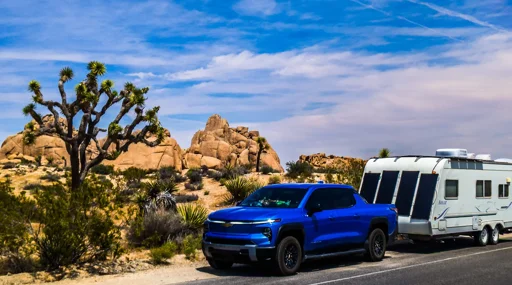
Support CleanTechnica's work through a Substack subscription or on Stripe. A couple of years ago, I wrote an article titled “We May Have Been Wrong To Mock GM’s Big Battery Approach To Electric Trucks.” Back then, it was incredibly easy to point and laugh at vehicles like the Hummer EV ... [continued]
That’s an estimate, not a guesstimate. It’s based on actual data. Which is obviously not what you were referring to. You specifically said “not the weather”.
That’s what a guesstimate is. A guess based on some actual data that’s still not all that reliable. It’s a bit of word play that acts as a reminder that an estimate is often wrong.
We account for wind speed and temperature changes that impact your range in real-time.
Tell me what they’re talking about. Because that’s just generic marketing speak. What’s it actually mean? How’s that work, exactly?
Tell me what they’re talking about. Because that’s just generic marketing speak.
What? LOL this is not complicated. They take wind speeds from weather reports and estimate the impact on efficiency using the known aerodynamics of the vehicle.
Are they current conditions or forcasts? General areas, or specific to the roads? Do they take into account the effects of surrounding buildings or tree cover, angles of attack relative to various sections of road? Do they specifically calculate based on vehicle drag coefficient or just a standard percentage range impact? Do they have not only vehicle drag, but vehicle and trailer combinations for various sizes and shapes and weights of trailer?
Those are just off the top of my head.
But none if this really matters. Your original idea of having 150miles of range between charging stops on long trips is already smashed down by over 60 miles. This is literally nibbles on maybe a few percent.


That’s an estimate, not a guesstimate. It’s based on actual data. Which is obviously not what you were referring to. You specifically said “not the weather”.
Then either you or they don’t know what they’re talking about.
That’s what a guesstimate is. A guess based on some actual data that’s still not all that reliable. It’s a bit of word play that acts as a reminder that an estimate is often wrong.
Tell me what they’re talking about. Because that’s just generic marketing speak. What’s it actually mean? How’s that work, exactly?
What? LOL this is not complicated. They take wind speeds from weather reports and estimate the impact on efficiency using the known aerodynamics of the vehicle.
That’s not realy any more information.
Are they current conditions or forcasts? General areas, or specific to the roads? Do they take into account the effects of surrounding buildings or tree cover, angles of attack relative to various sections of road? Do they specifically calculate based on vehicle drag coefficient or just a standard percentage range impact? Do they have not only vehicle drag, but vehicle and trailer combinations for various sizes and shapes and weights of trailer?
Those are just off the top of my head.
But none if this really matters. Your original idea of having 150miles of range between charging stops on long trips is already smashed down by over 60 miles. This is literally nibbles on maybe a few percent.
All of those things are going to have a minimal impact.
Except it’s not, for reasons I already stated in response to your initial reply.
They can mean the difference between full wind effect and zero.
Could you restate your other objections? I’m not seeing anything other than quibbling on the last 10% due to headwinds.