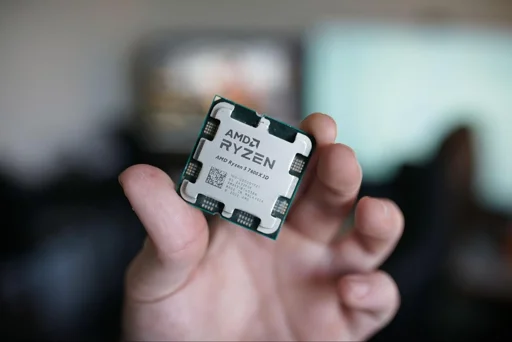
It really should be illegal to remove via updates any feature of a product which was present at the time of purchase.
Usually yeah, but to my understanding this feature was only advertised in their Pro version of the chip. I suspect it got enabled by mistake in the consumer version and nobody really noticed until now.
Earlier article mentioned it was acknowledged by high ranking amd officials multiple times over the years.
So they definitely knew.It might have been that it wasn’t documented internally and someone else removed it not knowing it was in use.
But at the latest with the initial bug report this was clear, at that point it did reach people who knew. So not undoing it, especially given the severity of the impact of silently disabling a security feature, is absolutely on amd with no excuse.Could you link the article? The one I’ve seen is the Ars Technica one, which mentions an engineer. That doesn’t mean he knows which features are supposed to not supposed to be commercially available, just what they actually do ship with. Left hand not knowing what the right is doing, basically.
Edit: I assume you’re referring to this paragraph -
Kilpatrick went on in the thread to remind Lendacky that in 2020, the engineer had confirmed TSME was supported on a Ryzen 3700X (a consumer CPU).
Nothing there makes me think differently. Engineer says that yes, the hardware supports it (because it does). Only later does somebody realise that no, the hardware actually isn’t supposed to be supporting it, they forgot to turn it off. Technical vs business.
It’s even suggested at the end of the Ars Technica article as one of the most likely reasons for the issue.
It is from a different article going deeper into it:
https://www.tomshardware.com/pc-components/cpus/amd-silently-removes-memory-encryption-from-consumer-ryzen-cpus-leaving-users-unaware-that-they-may-be-vulnerable-security-feature-vanishes-after-newer-agesa-firmware-amd-engineers-go-radio-silent-when-pressed-about-the-changeKilpatrick then brought up something especially awkward. He reminded Lendacky of a comment that the engineer had made back in 2020, confirming that a Ryzen 3700X, a consumer CPU, “should support TSME.” In a later 2025 comment in the same discussion, Lendacky again recommended using TSME, while noting that the motherboard BIOS provider had to expose the option. So there it was, AMD’s own engineer, years earlier, acknowledging the feature working on exactly the kind of lower-end chip now stripped of it, proving that Ryzen support was not some fantasy users invented.
So this engineer is openly recommending it.
is an email response stating that TSME “is a security feature only applied to PRO CPUs as part of AMD PRO Technologies,” notably the first time the company has publicly stated such a restriction
amd itself never stated anything at all, one way or another.
where two AMD engineers eventually responded: Tom Lendacky, an AMD fellow software engineer, and Mario Limonciello, an AMD senior principal software engineer.
Interestingly, neither engineer appeared to have a clear answer for why the feature had disappeared.
This sort of implies both knew of it and didn’t know of the specifics of the removal. But it isn’t clear.
Reading it again I may havw over-remembered though, to be fair. Not as high level as I thought.
This does also mention that amd didn’t “advertise rhe feature only for pro cpus”. They never specified it at all, so all there was to go on was the actual cpu behavior, which did support it on all lineups. With a feature mentioned and not stated to only be present on some lineups, it’s also reasonable to expect it present on all cpus.
At least here in my country we have a sort of “third time’s the charm” law. If something is allowed or let go despite being notified or complained about a third time, it’s understood that this allowance is (and, more importantly, was) intended de facto. AMD got more than enough notifications and time to deal with what was going on. Even more before the release of the products.
a BIOS option […] was removed in a recent update. Based on valuable community feedback [read: PR getting kicked in the balls], we will reinstate this option in an upcoming BIOS release in July."
After they were caught, that is.
Molotovs are a valuable, warm form of feedback!
Daily reminder that AMD is not a good company. Just less bad than Intel or Nvidia.
If you can, avoid giving them any money.
They just cannot stand being on top. They finally make components that are better than any competitor’s and they have to then ruin their own success.
This is the way all corporations work.
- Gain market dominance.
- Cut costs.
- Use lawyers to stifle competition.
Step 1 requires creating a product or service that is better than other options. Step 2 Enshittify the product or service. Bonus points for increasing the price at the same time. Step 3 Either sue or aquire competition to maintain market dominance.
Repeat steps 2 and 3 until the wheels fall off.
Intel did this until the wheels fell off. Then AMD took the top spot. Now AMD will do it until it all falls apart. Then Intel or perhaps a newcomer will regain top spot.
Nvidia might just survive.