
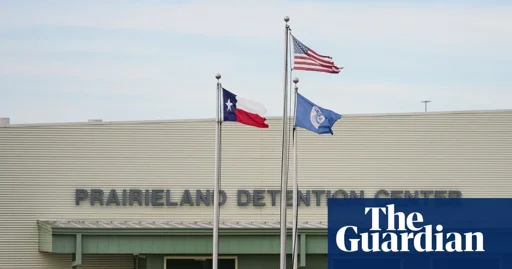
The demonstrators arrived late at night with a plan to set off fireworks as part of a noise demonstration to show solidarity with those detained inside. A few of the protesters spontaneously broke off from the main group and vandalized cars in the parking lot, a guard shack, slashed the tires on a government van and broke a security camera. When a police officer arrived on the scene and drew his weapon, one of the activists fired an AR-15 from the woods, hitting the officer in the shoulder. The officer survived.
Zachary Evetts, Autumn Hill, Savanna Batten, Elizabeth Soto and Meagan Morris were sentenced to 50 years in prison. Maricela Rueda, another demonstrator, was sentenced to 70 years in prison. Benjamin Song, who fired the gun at the police officer, was sentenced to 100 years in prison
The ninth defendant, Daniel Sanchez-Estrada was not at the protest, but was convicted of corruptly concealing a document or record after prosecutors said he moved leftwing zines and other materials at the request of Rueda, his wife, after she was arrested. Sanchez-Estrada was sentenced to 30 years in prison on Tuesday.
————
30 years for moving some pamphlets.

Like at all?? Wow.
Maybe get a decent Bluetooth speaker phone thingy? Get your own or the org can pay, which is mote than justified as a cost of accomidation to avoid ablism. The people who can’t or dont want to attend in person can participate remotely that way, same as they do now. Since the tech has become available and normalized I have attended various events set up that way. Need to practice using it before rolling out, and start with a committee or something small to work out technical issues.
Then make it so attending the meeting in person has social benefit like pre and post chit chat, maybe hangout or food sometimes. Make a pan of brownies to share. Or shoplift cheese and dates. the informal waiting around time is important as well as business. (Unless your meetings are extremely meandering.) Those who attend in person will have more coherency due to being physically present with each other. Which will incentivise attendance.
Depending on your organizational context, could possibly try to work around the ablism by supporting people to attend if possible such as organizing transportation either by carpooling or paying cab fare for people who truely cannot make it otherwise. (Just an example.) A hardship travel fund.
Another strategy is to rotate the meeting location around rather than defaulting to somewhere “central” which typically favors those who live in the city. The downtown people then need to have some commitment to occasionally going “far away” to a suburb or neighboring town, to share the burden of travel. And finding suitable meeting space can be difficult anywhere. But you learn a lot about your surroundings and create relationships while searching for them.
Idk what kind of group you’re in, where or with whom, so may or may not be exactly applicable. All the above is very doable though. IMO planning meetings is a foundational skill for any organizer/activist/revolutionary individual or group. It is not out of reach for anybody. It always includes some sort of thinking such as the above no matter the context. It is never a matter of just announcing a time and location you feel like and everyone just stops their life to obey. Planning meetings, including logistically difficult ones, is a way to learn about how to think about balancing the conflicting needs of various people, to do things fairly. And practical tasks like securing a venue, communicating to everyone, setting up and tidying after. Depending on your membership these are all things that people may have never done before, in which case they should all learn. They are skills of democracy.
No I mean strictly in person for things that are particularly sensitive. No online option. I understand it is a burden but it’s also a trade-off not just a cost, and the benefits are increasingly worth it.
They should be able to suggest ways to make things accessible to them, like as above examples.
I have worked with all kinds of people in all kinds of situations. The idea of being 100% unable to attend any meeting, ever, is implausible. Someone who smacks down such a proposal without trying to work it out is abusing good will.
I don’t think the people making such claims will enjoy what the “justice” system has in store for them.
Every real org with enough people will inevitably have members that overly focus on their own hardships and weaponize them when convenient. Handling them can be challenging because they often do good work despite the toxicity and because consciousness around these topics is often limited or liberal. This site, while not an org, sometimes struggles with tokenizing logic, for example.
I’m saying this because there is not an appeal to be made that can always make every person happy or mollified. For example, in the past I’ve suggested hardship funds, adding locations near them to the rotation, meeting outdoors while still masking (I actually prefer this). Eventually an org has to decide whether they want to alienate a self-centering member or work around them and it can really go either way depending on context.