
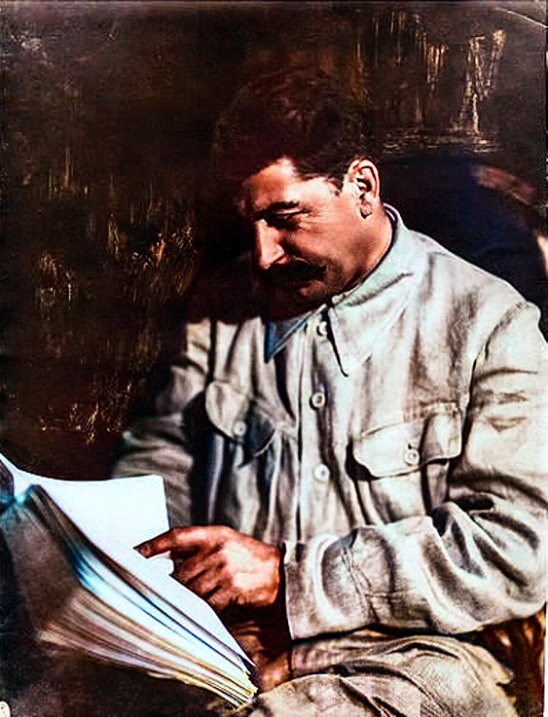

Image is of Ansarallah military spokesman Yahya Saree delivering a statement/speech.
The ceasefire appears to be at least temporarily over, with an exchange of fire between (what appears to be) predominantly Iran and the entity, though as always I expect we’ll find increasing evidence of direct US involvement.
The chain of events was as follows, in spoilers below for those who haven’t been keeping up:
chain of events summary
-
A while ago, Iran warned the occupation entity that if they strike Beirut (with particular emphasis on its southern suburbs, which is an area where Hezbollah officials/structures are concentrated as I understand it) then they will directly strike the north of Occupied Palestine, turning the area into a military zone, and encouraged settlers to leave to avoid civilian casualties.
-
This warning was grudging accepted by the entity, who ordinarily has a policy called the Daniyeh Doctrine, in which they murder civilians en masse by bombing apartment buildings and houses in enemy cities in order to pressure the military forces they are battling to give into conditions they ordinarily would not be obliged to accept, because the Zionist ground campaigns are usually fairly ineffective at achieving goals on medium to long timescales. While removing their ability to bomb Beirut didn’t halt the Daniyeh Doctrine entirely (they could and did hit other places), their distinct inability to strike the capital when they ordinarily could do that freely was a big source of discontentment in both the civilian population and the military.
-
As Hezbollah increasingly attrited the Zionist offensive forces, the attractiveness of bombing Beirut in retaliation increased regardless of the consequences, and of course the Zionists do still want to do anything they can to attack and weaken Iran directly and are much worse at hiding this than even the US. This resentment culminated on June 7th, where the Zionists conducted an airstrike on Beirut on a Hezbollah HQ.
-
Iran immediately said that this constituted a break in the ceasefire, and Khamenei put Iran back on a full war footing. Within 6 hours of the strike on Beirut, Iranian missiles were flying towards the northern occupied territories, in what they regarded as merely a warning shot. Western media was obviously fairly dismissive of this; 182% interception rates and all that jazz, but we have several videos of missiles hitting targets.
-
Trump publicly warned the Zionists to not respond, which many sensible people immediately diagnosed as kayfabe, and Iran obviously remained on guard against a counterattack. This came a few hours later from Zionist drones and stand-off strikes from aircraft likely in Iraqi airspace, just like in the initial phase of the war months ago. These hit sites in western and central Iran, including a petrochemical facility, but also with some interceptions.
-
Iran then responded to this counterattack with a yet bigger warning shot into the occupied territories. Ansarallah also joined in with strikes on the Zionists, and they additionally announced that the Red Sea is now closed to all vessels linked directly to the entity. Certain accounts have said that the Bab el Mandab is now actually under full blockade, but this is not clearly substantiated as of me writing this at about 2pm BST, June 8th. There’s been a lot of “considering closing” and “threatening to close” and “moving to close” the Red Sea over the ceasefire period that hasn’t materialized, so I don’t want to get out over my skis.
Worth noting that according to Yves over at Naked Capitalism (a fairly reliable and left-leaning, but not communist, website), we’re now about a month or so away from reaching “tank bottom”. This is largely because commercial demand destruction has not sufficiently occurred due to oil price market manipulations keeping it low, and also because there have been basically no government policies in the US like widespread work-from-home orders. So, soon the shortages will be of the literal oil molecules not being available and not just the price signal. So there’s an increasing anxiety in the US to get this conflict over before the economy really starts to crash in the latter half of the year, one way or another. As a deal seems only increasingly unlikely given US stubborness and inability to accept battlefield realities, a return to military strikes as we’ve seen appears the only way forward, despite almost catastrophic munitions shortages.
Last week’s thread is here.
The Imperialism Reading Group is here.
Please check out the RedAtlas!
The bulletins site is here. Currently not used.
The RSS feed is here. Also currently not used.
The Zionist Entity's Genocide of Palestine
Sources on the fighting in Palestine against the temporary Zionist entity. In general, CW for footage of battles, explosions, dead people, and so on:
UNRWA reports on the Zionists’ destruction and siege of Gaza and the West Bank.
English-language Palestinian Marxist-Leninist twitter account. Alt here.
English-language twitter account that collates news.
Arab-language twitter account with videos and images of fighting.
English-language (with some Arab retweets) Twitter account based in Lebanon. - Telegram is @IbnRiad.
English-language Palestinian Twitter account which reports on news from the Resistance Axis. - Telegram is @EyesOnSouth.
English-language Twitter account in the same group as the previous two. - Telegram here.
Mirrors of Telegram channels that have been erased by Zionist censorship.
Russia-Ukraine Conflict
Examples of Ukrainian Nazis and fascists
Examples of racism/euro-centrism during the Russia-Ukraine conflict
Sources:
Defense Politics Asia’s youtube channel and their map. Their youtube channel has substantially diminished in quality but the map is still useful.
Moon of Alabama, which tends to have interesting analysis. Avoid the comment section.
Understanding War and the Saker: reactionary sources that have occasional insights on the war.
Alexander Mercouris, who does daily videos on the conflict. While he is a reactionary and surrounds himself with likeminded people, his daily update videos are relatively brainworm-free and good if you don’t want to follow Russian telegram channels to get news. He also co-hosts The Duran, which is more explicitly conservative, racist, sexist, transphobic, anti-communist, etc when guests are invited on, but is just about tolerable when it’s just the two of them if you want a little more analysis.
Simplicius, who publishes on Substack. Like others, his political analysis should be soundly ignored, but his knowledge of weaponry and military strategy is generally quite good.
On the ground: Patrick Lancaster, an independent and very good journalist reporting in the warzone on the separatists’ side.
Unedited videos of Russian/Ukrainian press conferences and speeches.
Pro-Russian Telegram Channels:
Again, CW for anti-LGBT and racist, sexist, etc speech, as well as combat footage.
https://t.me/aleksandr_skif ~ DPR’s former Defense Minister and Colonel in the DPR’s forces. Russian language.
https://t.me/Slavyangrad ~ A few different pro-Russian people gather frequent content for this channel (~100 posts per day), some socialist, but all socially reactionary. If you can only tolerate using one Russian telegram channel, I would recommend this one.
https://t.me/s/levigodman ~ Does daily update posts.
https://t.me/patricklancasternewstoday ~ Patrick Lancaster’s telegram channel.
https://t.me/gonzowarr ~ A big Russian commentator.
https://t.me/rybar ~ One of, if not the, biggest Russian telegram channels focussing on the war out there. Actually quite balanced, maybe even pessimistic about Russia. Produces interesting and useful maps.
https://t.me/epoddubny ~ Russian language.
https://t.me/boris_rozhin ~ Russian language.
https://t.me/mod_russia_en ~ Russian Ministry of Defense. Does daily, if rather bland updates on the number of Ukrainians killed, etc. The figures appear to be approximately accurate; if you want, reduce all numbers by 25% as a ‘propaganda tax’, if you don’t believe them. Does not cover everything, for obvious reasons, and virtually never details Russian losses.
https://t.me/UkraineHumanRightsAbuses ~ Pro-Russian, documents abuses that Ukraine commits.
Pro-Ukraine Telegram Channels:
Almost every Western media outlet.
https://discord.gg/projectowl ~ Pro-Ukrainian OSINT Discord.
https://t.me/ice_inii ~ Alleged Ukrainian account with a rather cynical take on the entire thing.
https://archive.ph/uRYPQ
more
the fuck is wrong with france’s economy when they have heaps of applicants to the only european army besides ukraine actively in combat